
Florida Property Tax Proposal: Broward County Guide
Could Florida Eliminate Property Taxes? What Broward County Homeowners Need to Know
By Elizabeth Piscocama, REALTOR® | Elizabeth Invierte
Imagine opening your next property-tax bill and seeing a significantly smaller number. For many Florida homeowners, that sounds like welcome relief. But every reduction raises an equally important question: what happens to the cities, public-safety agencies and community services that currently depend on that revenue?
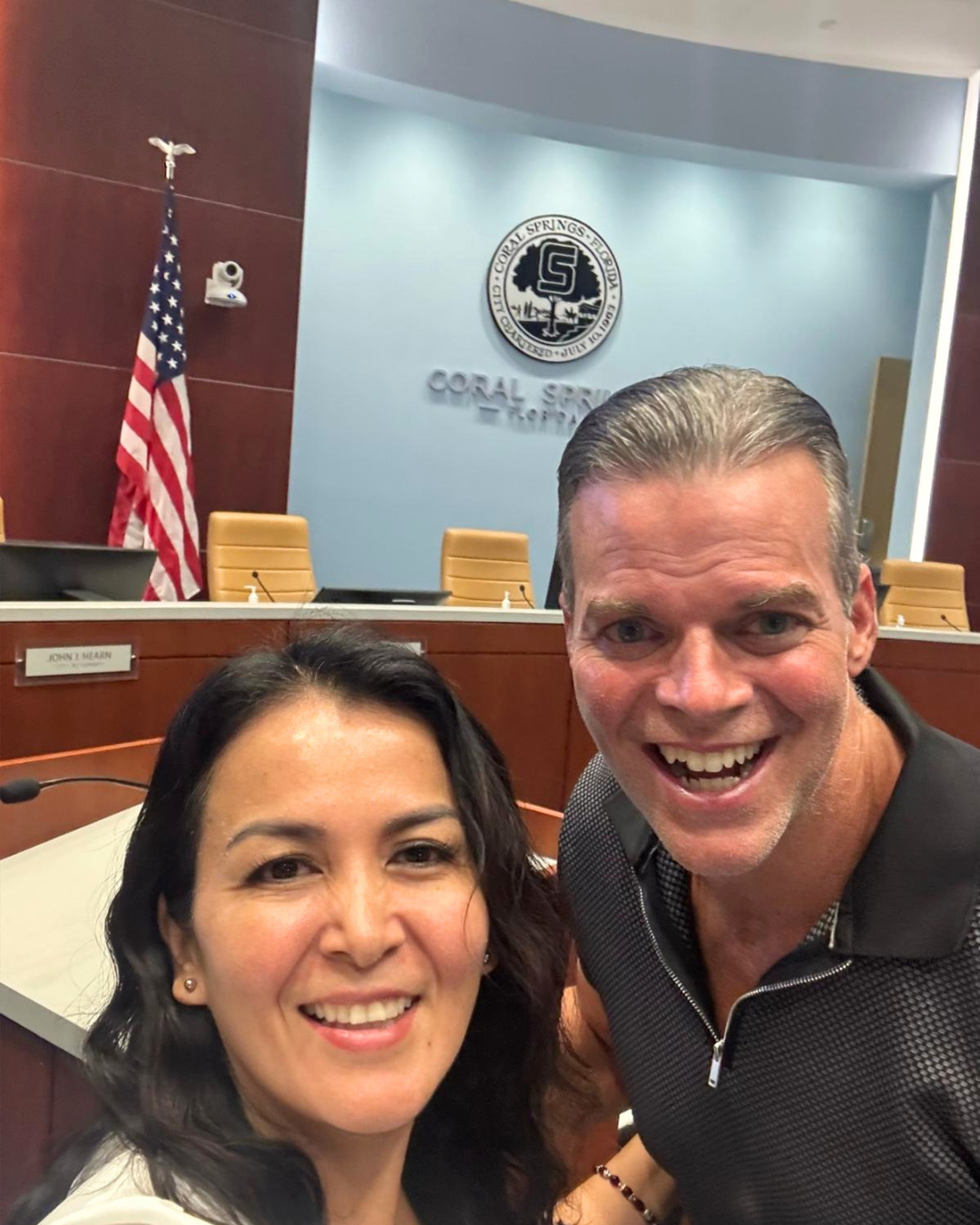
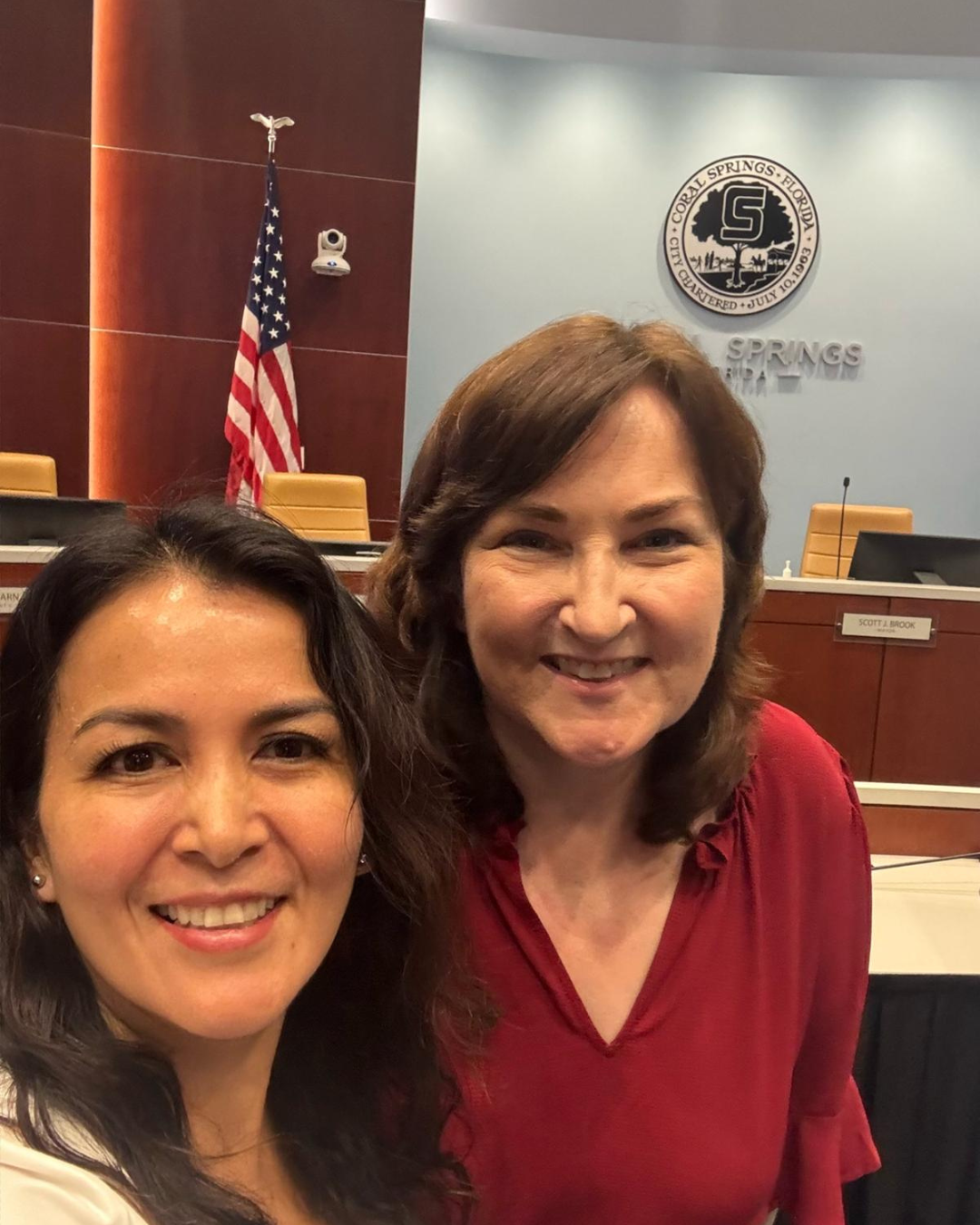
On September 16, 2026, I attended “Smart Leadership: Navigating Florida’s Property Tax Constitutional Amendment” at Coral Springs City Hall. The Coral Springs Coconut Creek Regional Chamber of Commerce organized the program, featuring:
Marty Kiar, Broward County Property Appraiser.
Florida State Representative Christine Hunschofsky, District 95 and Minority Leader pro tempore for the 2024-2026 term.
They discussed the possible effects of a proposed constitutional amendment on homeowners, businesses, local services and Broward County communities. This issue deserves more than a headline or political slogan. We need to understand both sides: the possible savings for homeowners and the possible reduction in funding for the communities where those homeowners live.
What Was Discussed?
According to the Broward County Property Appraiser’s presentation, the proposal would affect non-school property taxes on homesteaded residences.
The presentation described this framework:
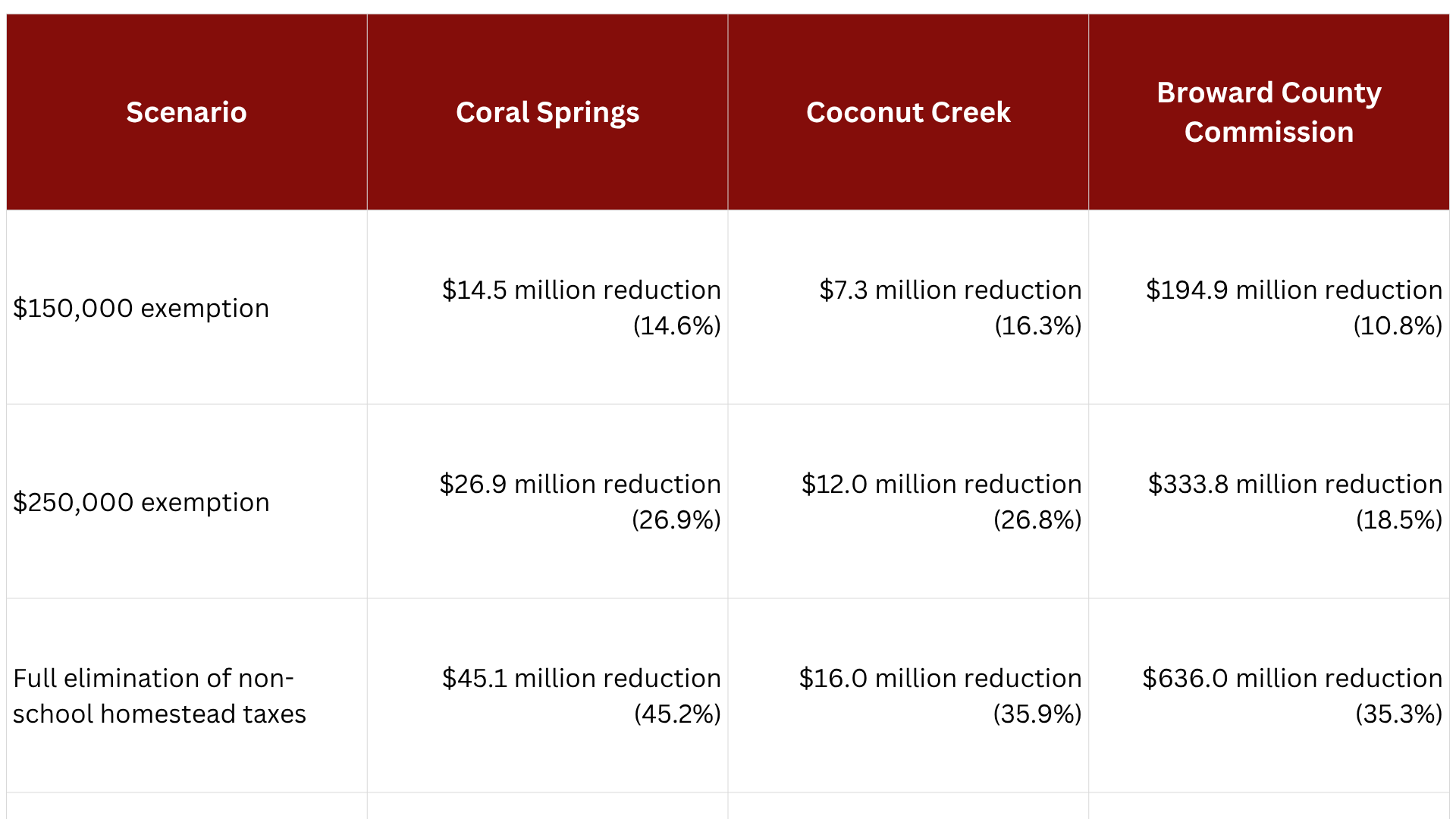
Increase the homestead exemption to $150,000 in the first year.
Increase it to $250,000 in the second year.
Allow the Florida Legislature to establish a schedule that could ultimately eliminate non-school property taxes on homesteaded properties.
Keep the school-board portion of the tax bill.
Take effect on January 1, 2027, if approved by Florida voters.
Eliminating non-school property taxes would not mean that a homeowner receives a completely tax-free property. A homestead-focused benefit also would not automatically apply in the same way to investors, landlords or second-home owners.
The presentation states that its analysis is informational and does not represent an official position for or against the proposal.
What Could Homeowners Save?
The presentation applied the proposal to the 2025 tax roll. These are projections—not future tax bills or guarantees of individual savings.
Under the $150,000 exemption scenario, it estimated average savings for qualifying Coral Springs homesteads of:
$1,277 for properties with less than $150,000 in assessed value.
$1,370 for properties with more than $150,000 in assessed value.
The actual benefit would depend on assessed value, exemption status, millage rates and the taxing authorities on the individual bill.
The Potential Effect on Local Revenue
The amount homeowners no longer pay would also represent revenue that local taxing authorities no longer collect.
The presentation also examined reducing the annual assessment cap for non-homesteaded properties from 10% to 5%. Applied to the 2025 roll, the estimated reductions were:
$1.25 million for Coral Springs, or 1.3%.
$636,665 for Coconut Creek, or 1.4%.
$26.4 million for the Broward County Commission, or 1.5%.
These estimates are snapshots based on 2025 values and millage rates. They do not predict every future budget decision, property-value change, fee adjustment or legislative action.
Why Local Property-Tax Revenue Matters
Property taxes help support public safety, emergency response, parks, infrastructure and other local operations.
During the discussion, the speakers said a full-elimination scenario could reduce revenue for the Children’s Services Council by approximately $51 million and for the North Broward Hospital District by nearly $100 million, potentially affecting services such as indigent care and behavioral-health support.
They also explained that large county budgets include restricted enterprise funds, such as airport and seaport revenue. Those funds generally cannot simply be transferred to replace property-tax revenue.
Local governments also maintain emergency reserves. After a hurricane, a city may need to spend immediately and wait years for reimbursement. A significant permanent loss of revenue could make those reserves harder to maintain.
The essential question is therefore not only, “How much could homeowners save?” It is also, “How would local governments replace the revenue or adjust services?”
The Current System Has Fairness Problems Too
Representative Hunschofsky acknowledged legitimate fairness concerns.
Because of Save Our Homes assessment limitations and differences in ownership history, neighbors with similar homes can receive very different property-tax bills. A recent buyer may pay substantially more than a longtime owner next door.
The discussion also addressed situations in which taxable value may rise even when market value does not rise in the same way.
The debate is not simply “taxes or no taxes.” The challenge is providing meaningful relief while protecting essential services and community stability.
Could This Affect Florida Real Estate?
Potentially—but the outcome cannot be predicted with certainty.
Lower non-school property taxes could reduce the ongoing cost of a homesteaded residence and make Florida more attractive to some buyers. If demand increased without similar growth in housing supply, prices could face upward pressure.
Buyers must remember that property taxes are only one ownership expense. They may still pay:
The school-board portion of property taxes.
Homeowners and flood insurance.
HOA or condominium fees.
Special assessments.
Maintenance, repairs and utilities.
Investors and second-home buyers should not assume a homestead proposal would apply to their properties in the same way.
My Personal Reflection
The numbers were important, but something else stayed with me.
I was genuinely impressed by how approachable Marty Kiar and Representative Christine Hunschofsky were. They did not simply deliver a prepared presentation and leave. They stayed engaged, listened carefully, answered questions and made themselves available to the people in the room.
Their warmth felt genuine. You could feel their positive energy when speaking with them, and they were gracious about conversations and photographs. Regardless of anyone’s position on the proposal, that accessibility matters. Public service is not only about holding office; it is also about helping residents understand complicated decisions, listening to their concerns and treating their questions with respect.
I appreciated the opportunity to learn directly from both of them.
Instagram:@martykiarbcpa | @christinehunschofsky
What Should Homeowners and Buyers Do?
Do not make a real estate decision based on a headline alone.
Review your current tax bill, confirm your homestead status and identify the taxing authorities receiving your payments. Residents can also review their TRIM notice, attend budget hearings and contact elected officials.
Buyers should never assume the seller’s current tax bill will become theirs. After ownership changes, assessed value may reset closer to market value. Request a personalized tax estimate before deciding whether a home fits your budget.
The Bottom Line
The proposal could provide meaningful relief to qualifying homeowners. The same change could also substantially reduce revenue for Coral Springs, Coconut Creek, Broward County and other taxing authorities. Both realities can be true at the same time.
This article is not intended to tell anyone how to vote. My purpose is to help homeowners, buyers and sellers look beyond the headline, understand the full picture and ask better questions before making important decisions.
Planning to buy or sell in Coral Springs or Broward County? Contact me for a complimentary Real Estate Review covering the property taxes, insurance, association expenses and market conditions that may affect your decision.
Elizabeth Piscocama, REALTOR®
The Keyes Company
305-901-9809
[email protected]
www.elizabethinvierte.com
@elizabethinvierte @elizabethpiscocama
View the Complete Presentation
Marty Kiar and Representative Christine Hunschofsky shared detailed slides showing the estimated fiscal effects on Broward County, Coral Springs and Coconut Creek.
CLICK HERE TO VIEW THE COMPLETE SLIDE PRESENTATION
The presentation uses the 2025 tax roll for its projections and is provided for informational purposes.
Sources and Important Note
Florida House of Representatives: Christine Hunschofsky, District 95
Broward County Property Appraiser presentation, Fiscal Impact Estimates for Broward County, Coral Springs and Coconut Creek for the Proposed Constitutional Amendment.
Coral Springs Coconut Creek Regional Chamber of Commerce event materials and photographs.
Information reflects materials and public discussion available in September 2026. Proposals, ballot language and implementation details can change. Fiscal estimates were calculated as if the proposal had applied to the 2025 tax roll. This article is educational and is not legal, tax or financial advice.
